
• Welcome to MacanEVowners! If you're joining us from Taycanforum.com, then you may already have an account here.

    If you were registered on Taycanforum as of January 24, 2024 or earlier, then you can simply login here with the same username and password

    If you wish, you can remove your account here.
Sponsored

Macan Turbo EV – Sport Plus vs Normal… turns out it was Just Regen?

MMR

Macan Turbo
Well-Known Member
Joined
Aug 19, 2025
Threads
5
Messages
195
Reaction score
171
Location
London
Vehicles
Macan Turbo
Country flag
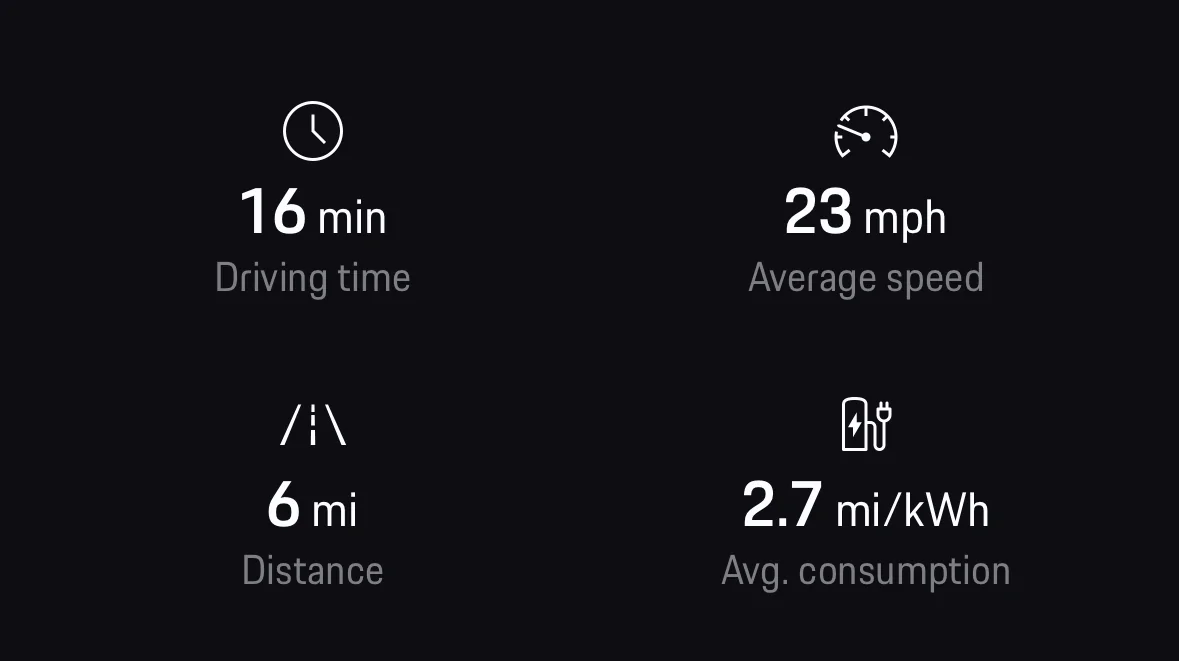
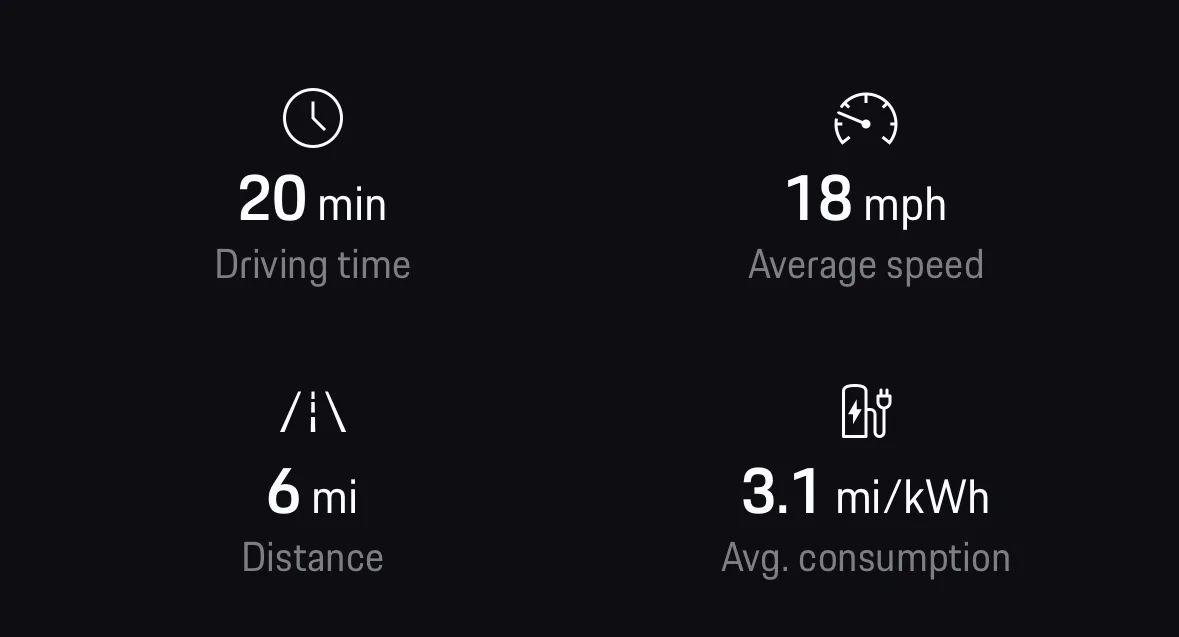
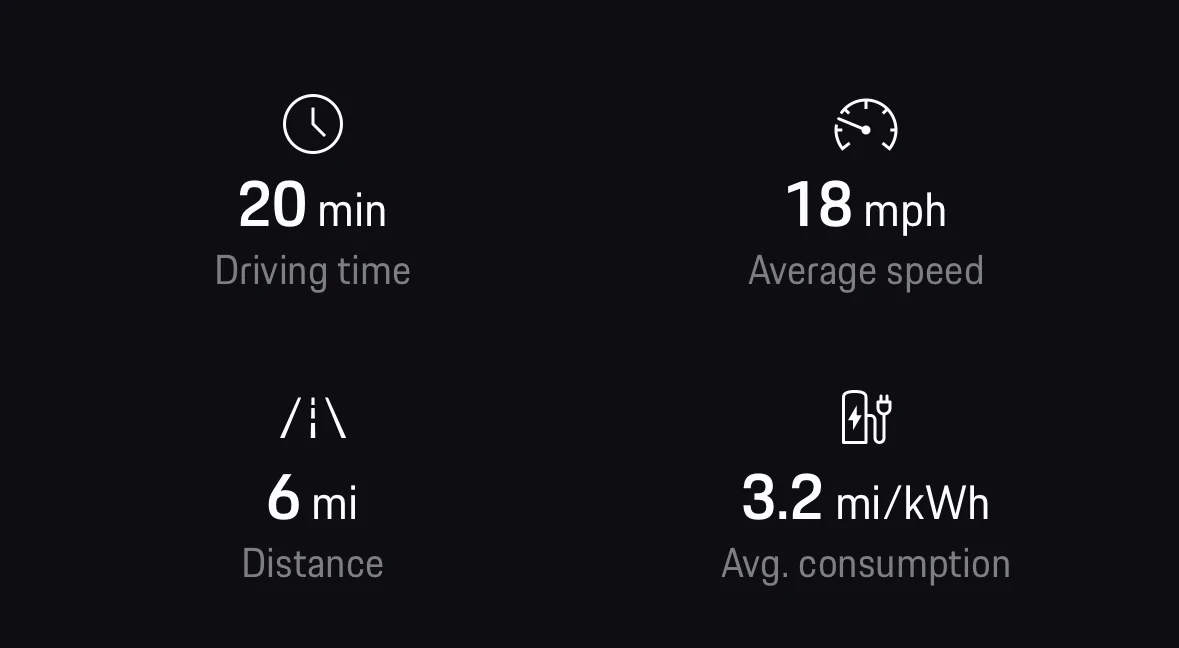
Did the exact same 6-mile trip four times yesterday in my Macan Turbo Electric.

First two runs were in Normal (as I usually drive). Then I switched to Sport Plus for the last two to feel the difference in the ride — I’ve barely used Sport Plus in the two months I’ve had the car.

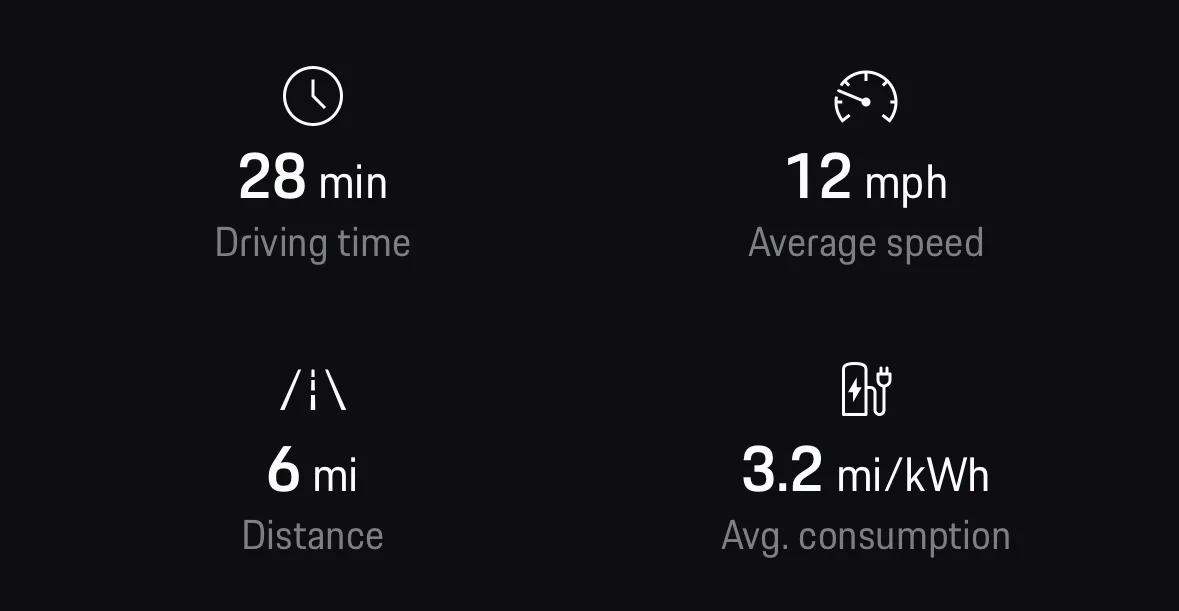
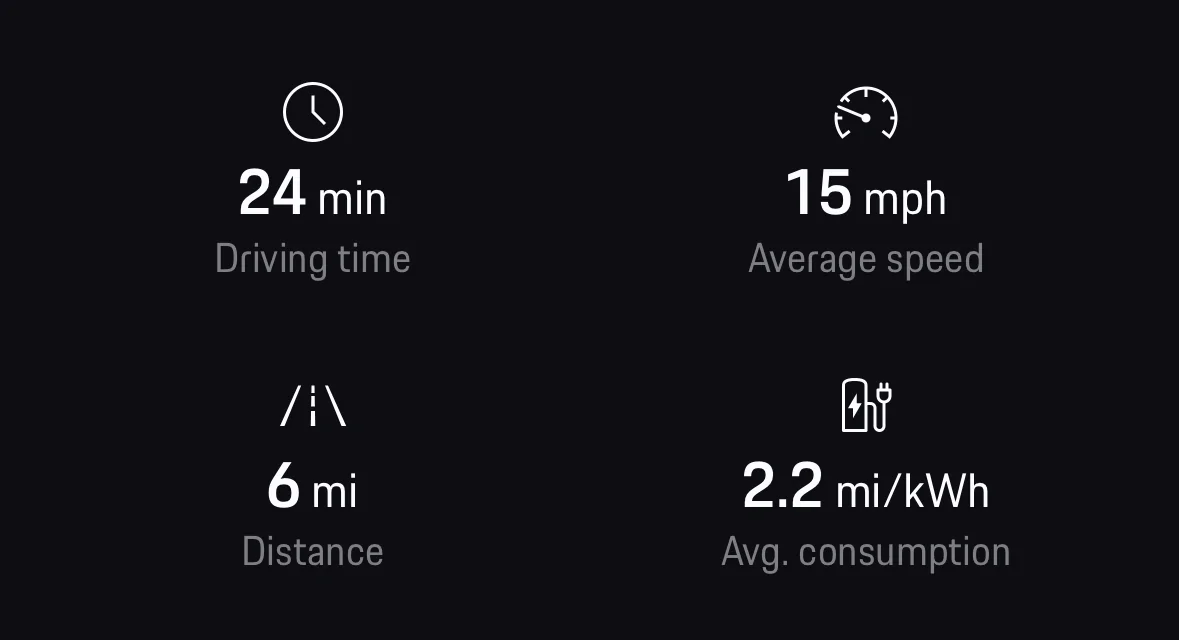
Switching to Sport Plus immediately knocked about 5 miles off the predicted range (as expected), but the actual consumption was better — 3.1 mi/kWh and 3.2 mi/kWh vs 2.7 and 2.2 in Normal.

Same 6-mile route, same day, so weather and terrain were effectively constant.

Ride felt noticeably sharper — throttle response, body control, everything tighter — but I didn’t expect it to be more efficient on paper.

Anyone got a technical explanation for that? Throttle mapping? Regen strategy? Something else going on?

Electric Macan EV Macan Turbo EV – Sport Plus vs Normal… turns out it was Just Regen? IMG_4583


Electric Macan EV Macan Turbo EV – Sport Plus vs Normal… turns out it was Just Regen? IMG_4584


Electric Macan EV Macan Turbo EV – Sport Plus vs Normal… turns out it was Just Regen? IMG_4585


Electric Macan EV Macan Turbo EV – Sport Plus vs Normal… turns out it was Just Regen? IMG_4586
Sponsored


pm4s

Macan 4S
Well-Known Member
Joined
Jun 12, 2025
Threads
0
Messages
179
Reaction score
134
Location
EU
Vehicles
Macan 4S
Tons of reasons. Will list a couple.
You did not alternate between runs meaning first 2 runs used more energy because car was not at operating temp (battery, cabin, etc.,), driver through repetition keeps improving, driving becomes much smoother, learns environment, braking/turning points, has to process less new info, weather might have been improving throughout the runs, getting warmer.
Was direction of travel the same in all runs or downhill at some of the runs?
Sport Plus uses both motors all the time opposed to Normal which uses the rear motor unless it needs the power/traction of the front motor so less efficient, at these low speeds the only thing it would have going for it would be the low ride height when extremely windy, again speeds are too low to make a positive impact.
Human factor involved, your average speed varies by 53% so without consistent traffic/driving pattern you can't expect same consumption. We only have average speed to go by, driving at 50% at 30mph and 50% at 90mph or 100% at 60mph have the same average speed but consumption will not be the same.
Without graphs of all parameters like "throttle", brake, speed, etc. you can't reach conclusion as you have lots of variables.
The more variables you eliminate you will get more accurate results, i.e. drive the same piece of highway road between 2 points after doing a couple of runs to let the car reach operating temp and driver to familiarize with the points, use cruise, reset trip meter at first point, alternate between runs, etc.
There are also phycological factors involved car in Sport Plus feels faster, sharper "throttle response", stiffer suspension, so you don't push it as much. Traffic alone alone (stop/start) can account for the difference.
 
  • Like
Reactions: MMR

W1NGE

Well-Known Member
First Name
Adrian
Joined
Jan 11, 2021
Threads
14
Messages
972
Reaction score
643
Location
Aberdeen, Scotland
Vehicles
992.2, ex.Taycan GTS ST owner, Macan T (EV upgrade a tempter!)
Country flag
Did the exact same 6-mile trip four times yesterday in my Macan Turbo Electric.

First two runs were in Normal (as I usually drive). Then I switched to Sport Plus for the last two to feel the difference in the ride — I’ve barely used Sport Plus in the two months I’ve had the car.

Switching to Sport Plus immediately knocked about 5 miles off the predicted range (as expected), but the actual consumption was better — 3.1 mi/kWh and 3.2 mi/kWh vs 2.7 and 2.2 in Normal.

Same 6-mile route, same day, so weather and terrain were effectively constant.

Ride felt noticeably sharper — throttle response, body control, everything tighter — but I didn’t expect it to be more efficient on paper.

Anyone got a technical explanation for that? Throttle mapping? Regen strategy? Something else going on?

IMG_4583.webp


IMG_4584.webp


IMG_4585.webp


IMG_4586.webp
I would doubt that it is more efficient all other things being equal.

Sport Plus uses energy to heat the battery in readiness for more spirited driving and so must directly impair consumption.

Try driving for a few days in that mode - set PASM to Normal to make it bearable and then see what your consumption looks like.

The guessometer is not that reliable - same on Taycan.
 
OP
OP
MMR

MMR

Macan Turbo
Well-Known Member
Joined
Aug 19, 2025
Threads
5
Messages
195
Reaction score
171
Location
London
Vehicles
Macan Turbo
Country flag
All fair points 👍

I completely agree this isn’t a controlled test — short urban runs will always have variables. Traffic alone can swing things massively.

Direction was identical on all runs (out and back on the same 6-mile route), so no net downhill advantage. Weather was stable across the window I drove it.

The trips were spaced out far enough that the car wasn’t heat-soaked from the previous run, so battery and drivetrain temps should have been broadly similar at departure each time. It wasn’t a case of doing four back-to-back pulls where the later runs benefited from higher operating temps.

On the dual-motor point, that’s what surprised me. In theory Sport Plus holding both motors active and potentially preconditioning the battery should impair efficiency, not improve it — which is why the 3.1 mi/kWh caught my attention.

I’m not claiming Sport Plus is “more efficient” in general — just that on this short urban route it returned better consumption than the two Normal runs.

I do this run multiple times a week and have done for the past two months. In Normal mode I’ve never seen efficiency above 2.7 mi/kWh on it, so getting two back-to-back runs in Sport Plus showing 3.x genuinely surprised me.

Could it be that as the battery would’ve been slightly cold, Sport Plus brought it closer to optimal operating temperature, as it were short trips and not preconditioning for long the gain in efficiency outweighed the heating cost?

I’ll try more runs
 

daveo4EV

Macan Turbo
Well-Known Member
First Name
David
Joined
Jan 28, 2019
Threads
77
Messages
1,591
Reaction score
2,522
Location
Santa Cruz
Vehicles
Macan Turbo,Cayenne Hybrid, 911(s) GT3/Convertable
Country flag
Did the exact same 6-mile trip four times yesterday in my Macan Turbo Electric.

First two runs were in Normal (as I usually drive). Then I switched to Sport Plus for the last two to feel the difference in the ride — I’ve barely used Sport Plus in the two months I’ve had the car.

Switching to Sport Plus immediately knocked about 5 miles off the predicted range (as expected), but the actual consumption was better — 3.1 mi/kWh and 3.2 mi/kWh vs 2.7 and 2.2 in Normal.

Same 6-mile route, same day, so weather and terrain were effectively constant.

Ride felt noticeably sharper — throttle response, body control, everything tighter — but I didn’t expect it to be more efficient on paper.

Anyone got a technical explanation for that? Throttle mapping? Regen strategy? Something else going on?

IMG_4583.webp


IMG_4584.webp


IMG_4585.webp


IMG_4586.webp
anything less than 100 miles isn't enough to really "flush out" what the ongoing efficiency is - there is too much "noise" in the system for short runs that can easily skew the efficiency measurements…

EV's are enormously consistent in terms of consumption across longer distances for the identical route/driving-conditions…

I'd find a longer route and then test the two different "modes" to see what happens.
 
  • Like
Reactions: MMR


Wivenhoe

Macan 4S
Well-Known Member
First Name
Bob
Joined
Dec 22, 2024
Threads
19
Messages
501
Reaction score
283
Location
Wivenhoe999
Vehicles
Macan 4S
Country flag
Apologies for asking a basic question - was the heating on or totally off on all runs.
 
OP
OP
MMR

MMR

Macan Turbo
Well-Known Member
Joined
Aug 19, 2025
Threads
5
Messages
195
Reaction score
171
Location
London
Vehicles
Macan Turbo
Country flag
Ahh I’m starting to think the answer might actually lie with regen.

In Normal mode regen is automatically on, whereas in Sport Plus it isn’t. So maybe the difference isn’t the motor strategy at all, but how the car is handling lift off and braking energy recovery.

If Sport Plus is allowing more coasting and I’m naturally braking more progressively, that could potentially explain the better mi/kWh on a short urban run.

Just thinking out loud, but that feels like a more plausible explanation than dual motor efficiency considering all other variables are the same.
 

Yves

Macan Turbo
Well-Known Member
First Name
Yves
Joined
Jan 28, 2024
Threads
25
Messages
698
Reaction score
518
Location
Belgium
Vehicles
BMW iX / Macan Turbo
Country flag
you can set regen on or off for Normal mode as well ... coasting is always more efficient. The only issue I have when regen is off, the car does not use the regen of the brake pedal the first 5 to 10 minutes ... so typically I have the auto regen on at the start of the day and turn it off after like 10 minutes
 
  • Like
Reactions: MMR
OP
OP
MMR

MMR

Macan Turbo
Well-Known Member
Joined
Aug 19, 2025
Threads
5
Messages
195
Reaction score
171
Location
London
Vehicles
Macan Turbo
Country flag
Electric Macan EV Macan Turbo EV – Sport Plus vs Normal… turns out it was Just Regen? IMG_5079


I know it’s not a completely scientific test, but doing the same run in Normal with regen turned off gave better consumption than the earlier runs.

So at least on this particular route, having regen on seems to be less efficient than coasting, regardless of which drive mode the car is in.


W1NGE

Well-Known Member
First Name
Adrian
Joined
Jan 11, 2021
Threads
14
Messages
972
Reaction score
643
Location
Aberdeen, Scotland
Vehicles
992.2, ex.Taycan GTS ST owner, Macan T (EV upgrade a tempter!)
Country flag
IMG_5079.webp


I know it’s not a completely scientific test, but doing the same run in Normal with regen turned off gave better consumption than the earlier runs.

So at least on this particular route, having regen on seems to be less efficient than coasting, regardless of which drive mode the car is in.
Coasting is king - we know that - but is a trade-off ultimately depending on how much juice you need to add back to maintain the same speed etc.

No different to an ICE - all Porsches with PDK transmissions have the coasting feature since 2012 and use less fuel as a consequence (all other things being equal). EVs will be no different.
 

daveo4EV

Macan Turbo
Well-Known Member
First Name
David
Joined
Jan 28, 2019
Threads
77
Messages
1,591
Reaction score
2,522
Location
Santa Cruz
Vehicles
Macan Turbo,Cayenne Hybrid, 911(s) GT3/Convertable
Country flag
out of interest, why is that?
it's about keep the disc's in good condition and ready for braking action…
 
  • Like
Reactions: MMR

daveo4EV

Macan Turbo
Well-Known Member
First Name
David
Joined
Jan 28, 2019
Threads
77
Messages
1,591
Reaction score
2,522
Location
Santa Cruz
Vehicles
Macan Turbo,Cayenne Hybrid, 911(s) GT3/Convertable
Country flag
lift-off regen (or in some vehicle's more extreme one pedal driving) it _NOT_ more efficient than coasting…one pedal driving is what you do if you can not engineer blended braking…

first we need to start with some simple high level 'facts'
  1. the friction brakes transform kinetic energy in thermal heat - this heat is dissipated in into the atmosphere…so the more you use them the more you don't add power back to the battery
  2. there is no energy recovery - there is only energy you put in to the system that you get back - it was your energy in the first place - you haven't gained anything - you've just lost less that you would've…
  3. regen isn't actually that efficient, but it's vastly better than nothing…losses however are still high…
what does Porsche understand that most Tesla-fanboi's and other regen fanatics don't…

99% of conversations on the internet regarding one-pedal driving miss the point and do not focus on the critical questions regarding lift-off-regen-one-pdeal-driving (LOROPD)

when the driver lifts off the accelerator what is their intention?
  1. do they just want to stop adding/giving power to the system to maintain speed or adjust momentum?
  2. are they preparing to actually slow the car?
broadly in the case of #1 LOROPD is not efficient because it immediately starts harvesting power for the battery and slowing the car - now if you're going to go back to power or wish to maintain speed you now have to add back the power you lost lost - and you have to add back more power than you gained from regen - you've actually lost more power than if you had simply coasted…

in case #2 since you're slowing the car anyways might as well start harvesting power as soon as possible…any power you've could've recovered will just be wasted as heat if we don't get into regen as soon as possible…

Regen is _NOT_ efficient it's just better than nothing…

Tesla put LOROPD in place for several reasons:
  • they couldn't do blended braking
  • they wanted to have people use the friction brakes as little as possible
  • if you get people used to high powered regen they use the friction brakes less
  • if your friction brakes are used less you don't have to cool them - reducing cooling ducts drag
  • if your friction brakes are used less they don't have to be as large/heavy
  • etc…
  • there is a whole bunch of "whole system" efficiency gains to be had if you don't design a high performance friction braking system…weight , aero-drag, wheel size, etc…
  • Teslas friction brake "system" is actually one of the worse brake system ever deployed on a modern vehicle because it's not designed to be used that often - it bodes on unsafe - and there are stories of near failures on long downhill grades that when the battery is close to full or actually full and regen can't be that power, long duration use of Tesla's brake system on downhill grades drives the system into near failure…Tesla depends on regen Ana OPD so that they can under-design their friction brake system to gain efficiency in other area…steady state causing for example and overall vehicle weight…
    • Porsche pays a huge efficiency penalty because they have world class high performance brakes on their EV's with world class regen. But their friction brakes have no issue with high-performance or high duration use in the compete absence of regen. However this braking system pays huge efficiency penalties in steady state power consumption hauling around an un-necessariily over-designed braking system that is rarely (or never) used…
Coasting is more efficient if you really didn't intend to slow the vehicle
if you don't have blended braking friction brakes are waste of energy

OPD is a "hack" for a simplistic braking system to recover as much energy as possible as often as possible - but it also recovers energy when the driver really didn't intended to slow the car - but "oh well"

Porsche's approach is the most technically sophisticated - because regen only happens when you actually use the brake pedal the driver clearly intended to slow the car - time to start harvesting cause otherwise this is all going to be lost energy - and in theory if the friction brakes are not necessary as determined by the blended braking software you never used the friction brakes and still bring the car to a stop…meaning you harvested the maximum amount of energy possible with out a single joule of energy being lost to thermal output…

I'll leave it as an exercise for the reader to determine if Porsche's implementation of blended braking achieves "ideal"…
  • you don't want OPD for real performance driving because it causes weight transfer
  • you don't want OPD for real performance driving because the level of regen (and therefore deceleration) will vary based on battery state
    • (NOTE: the new F1 2026 regulations and regen and battery size/state are causing real problems for the F1 drivers because based on battery state their braking application has to change - it's a real sh*t show)
any conversation about regen and if it's more of less efficient is meaningless without bringing the driver's intention into the conversation - and it all centers around the question of:

did you want to actually slow down the car?

if the answer is "yes" then start regen harvesting as soon as possible
if the answer is "no" then regen should not happen and the vehicle should coast losing the least amount of energy possible…

now the question is - how do we design an interaction system for the driver such that they "cause" regen to happen…and that leads to OPD, blended braking, paddles on the steering wheel (Chevy Bolt) etc…

regen is only efficient if you were going to slow the car anyways - otherwise it's a loss…
Sponsored

 
Last edited:


Top